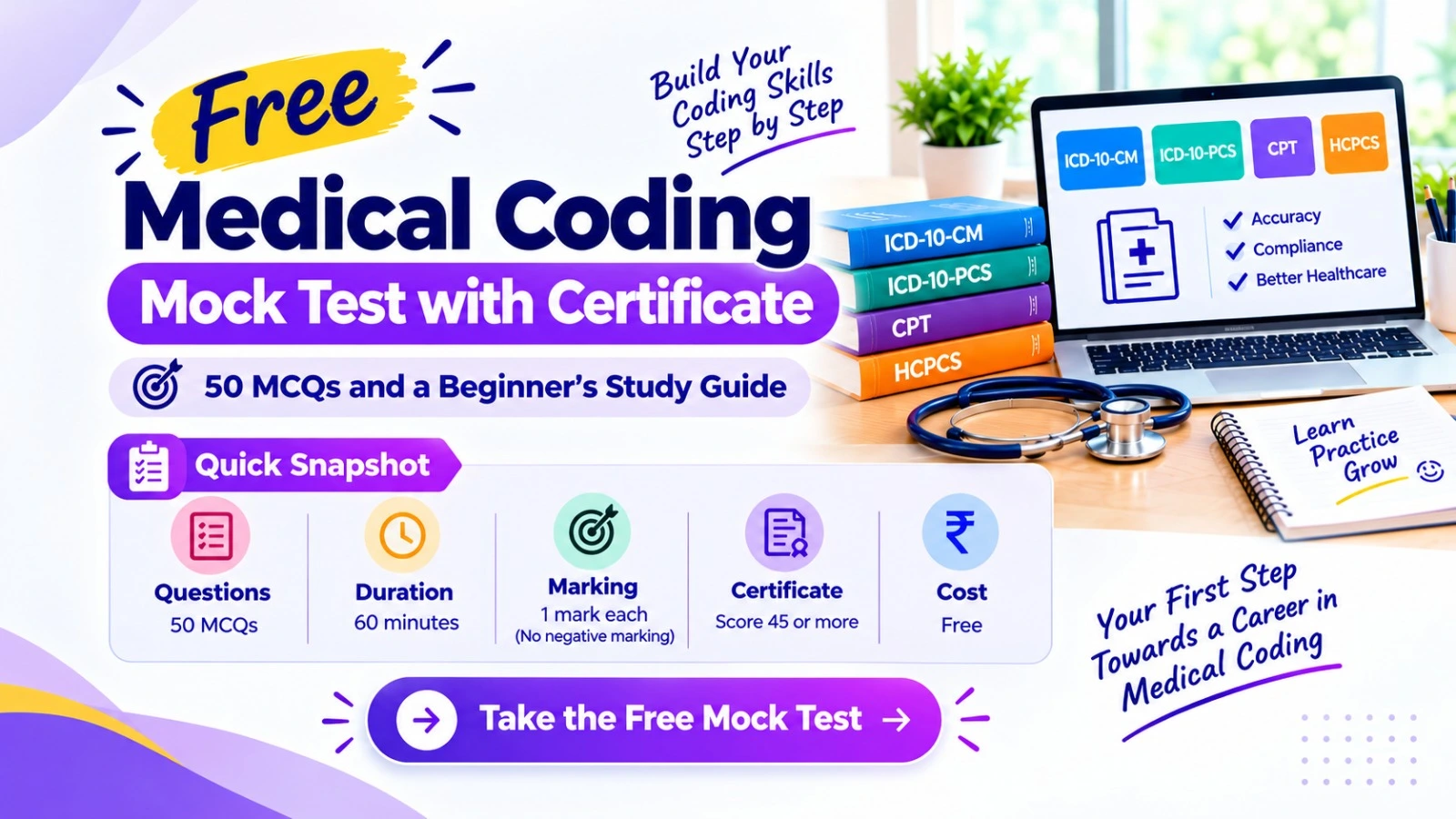
Free Medical Coding Mock Test with Certificate: 50 MCQs and a Beginner’s Study Guide
Published on: October 27, 2026 If you’re a pharmacy, life science or nursing graduate, someone has… Read More
Published on: October 10, 2026
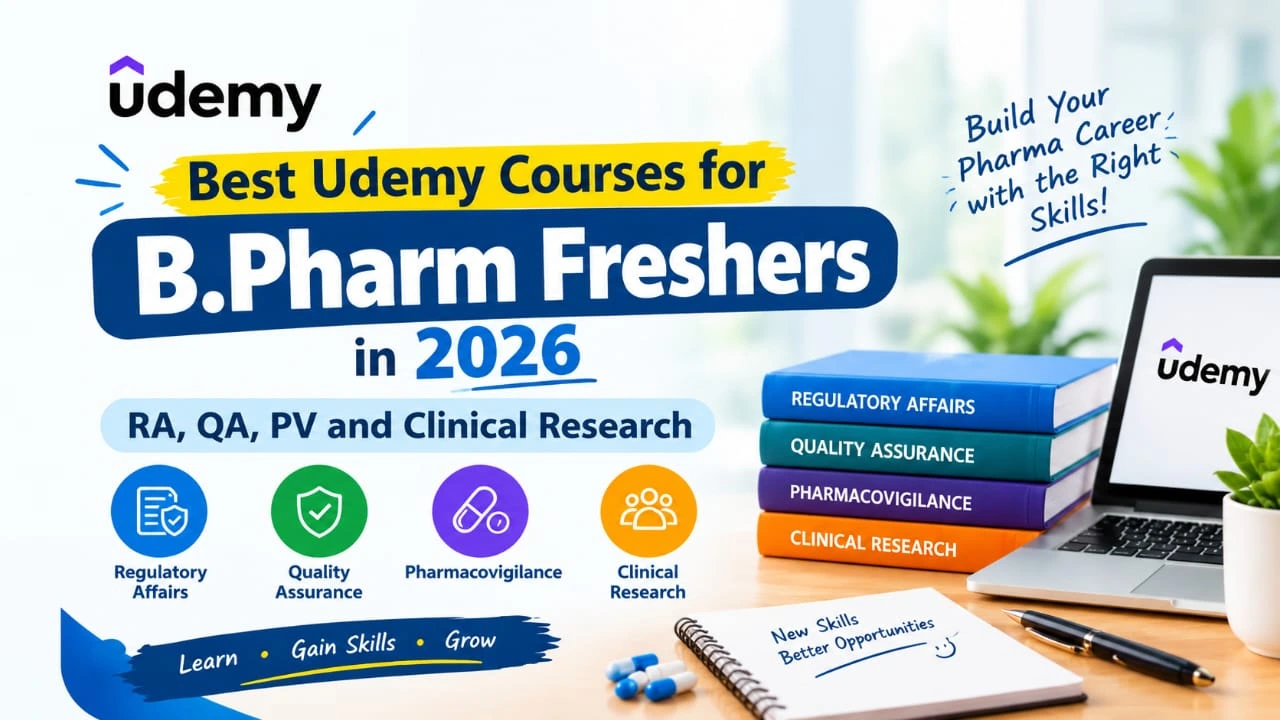
After B.Pharm, choosing a career path can be challenging. Job advertisements may mention terms such as GMP, CAPA, CTD/eCTD, ICSR and GCP without explaining how they relate to the work.
Online courses can help you explore a pharmaceutical specialization and understand its basic terminology before pursuing further training. Udemy offers courses covering Regulatory Affairs (RA), Quality Assurance (QA), Pharmacovigilance (PV) and Clinical Research.
This guide compares seven Udemy courses by subject, listed rating, duration and learning topics to help you decide which area to explore first.
| Subject | Course Name | Rating | Duration |
|---|---|---|---|
| Regulatory Affairs | Certificate Course in Drug Regulatory Affairs | 4.3/5 | 3h 9m |
| Regulatory Affairs | Pharma Drug Regulatory Affairs Certificate Course – DRA 2026 | 4.0/5 | 8h 16m |
| Quality Assurance | Foundations of Pharmaceutical Quality Assurance and GMP | 4.3/5 | 2h 11m |
| Pharmacovigilance | Pharmacovigilance Certification Course: Drug Safety (2026) | 4.4/5 | 15h 29m |
| Pharmacovigilance | Complete Pharmacovigilance Training Certificate Course-2026 | 4.2/5 | 2h 55m |
| Clinical Research | Clinical Research Certificate Course 2026 | 4.4/5 | 2h 10m |
| Good Clinical Practice | Good Clinical Practice for Clinical Research Professionals | 4.4/5 | 7h 25m |
Ratings and durations may change. Confirm the current rating, course duration and price on Udemy before enrolling.
Regulatory Affairs involves pharmaceutical regulations, product registration and documentation submitted to regulatory authorities.
| Detail | Information |
|---|---|
| Instructor | Dr. Sachin Potawale |
| Duration | 3 hours 9 minutes |
| Listed rating | 4.3/5 |
| Last updated | September 2026 |
| Course link | View on Udemy |
The course introduces regulatory affairs terminology, the US FDA regulatory framework and pharmaceutical regulatory requirements. Its listed topics include IND, NDA, ANDA, DMF, the Orange Book, CTD/eCTD, GMP and regulatory strategy.
This course may suit beginners who want a relatively short introduction to regulatory affairs. Focus on understanding the purpose of different regulatory documents and applications rather than memorising abbreviations alone.
| Detail | Information |
|---|---|
| Instructor | Mahesh Pratapwar |
| Duration | 8 hours 16 minutes |
| Listed rating | 4.0/5 |
| Last updated | February 2026 |
| Course link | View on Udemy |
The listed syllabus covers CTD/eCTD structure, dossier preparation and submission, DMF, IND, NDA, ANDA, ICH guidelines and regulatory processes. It also includes demonstrations of eCTD-related software and interview preparation material.
Its longer duration may appeal to learners who want to spend more time studying regulatory submissions and related concepts. Compare its syllabus and preview lessons with Course 1 before deciding.
For career roles and relevant skills, read Career in Regulatory Affairs After B.Pharm.
Quality Assurance focuses on pharmaceutical quality systems, documentation and procedures used to maintain product quality.
| Detail | Information |
|---|---|
| Instructor | Anna Khalko |
| Duration | 2 hours 11 minutes |
| Listed rating | 4.3/5 |
| Last updated | September 2026 |
| Course link | View on Udemy |
The listed content covers:
These concepts can help you understand terminology used in QA job advertisements. For example, learn why a deviation may require documentation and investigation, and how CAPA is used to address a problem and help prevent recurrence.
After studying the material, practise explaining these concepts using hypothetical examples. This can help you prepare for basic technical interview questions, although workplace competence also requires appropriate practical training.
Read Career in Quality Assurance After B.Pharm for more information about this field.
Pharmacovigilance involves detecting, assessing, understanding and preventing adverse effects and other medicine-related problems. It may interest graduates who prefer drug-safety work, case documentation and safety reporting.
| Detail | Information |
|---|---|
| Instructor | Primepharmacovigilance academy |
| Duration | 15 hours 29 minutes |
| Listed rating | 4.4/5 |
| Last updated | September 2026 |
| Course link | View on Udemy |
The listed syllabus includes Individual Case Safety Reports (ICSRs), pharmacovigilance regulations, MedDRA, WHO Drug Dictionary, seriousness and causality assessment, case processing, signal detection, risk management and aggregate safety reports such as PBRER and PSUR.
This course may suit learners looking for broader coverage of drug-safety concepts. Pay particular attention to the ICSR workflow and the purpose of different safety-reporting activities.
| Detail | Information |
|---|---|
| Instructor | Mahesh Pratapwar |
| Duration | 2 hours 55 minutes |
| Listed rating | 4.2/5 |
| Last updated | January 2026 |
| Course link | View on Udemy |
The course introduces pharmacovigilance fundamentals, terminology, drug discovery and development, clinical trials, case management and post-marketing safety. It also discusses career roles and pharmacovigilance reporting concepts.
Its shorter duration may suit learners who want an initial overview before studying the subject in greater depth.
Which PV course should you choose? Course 1 offers a longer programme with more extensive listed coverage, while Course 2 provides a shorter introduction. Compare the current syllabuses and preview lessons to determine which best suits your learning goals.
For further guidance, read Career in Pharmacovigilance After B.Pharm.
Clinical Research involves the planning and conduct of studies that evaluate medical interventions. Good Clinical Practice (GCP) focuses on standards for conducting clinical trials and protecting participants’ rights, safety and well-being.
| Detail | Information |
|---|---|
| Instructor | Mahesh Pratapwar |
| Duration | 2 hours 10 minutes |
| Listed rating | 4.4/5 |
| Last updated | April 2026 |
| Course link | View on Udemy |
The listed topics include clinical research fundamentals, drug development, clinical trials and their phases, ethics committees, study protocols and career opportunities.
This course can introduce B.Pharm graduates to clinical research terminology before they explore entry-level opportunities related to clinical-trial coordination and study support.
| Detail | Information |
|---|---|
| Instructor | Dr. Vincent Baeyens |
| Duration | 7 hours 25 minutes |
| Listed rating | 4.4/5 |
| Last updated | August 2026 |
| Course link | View on Udemy |
The listed syllabus covers ICH-GCP E6(R3), clinical-trial responsibilities, ethics committees, essential documents, investigator responsibilities, protocols, data governance, quality management and inspection findings.
This course focuses specifically on GCP rather than providing only a general introduction to clinical research. Its listing also includes practical case-based material. Check the current syllabus to confirm that its content matches your learning objectives.
Use this guide to narrow your options before purchasing a course.
| Your Interest | Subject to Explore | Important Topics |
|---|---|---|
| Regulations and submission documents | Regulatory Affairs | CTD/eCTD, ICH guidelines, regulatory applications |
| Manufacturing quality and procedures | Quality Assurance | GMP, deviations, CAPA, documentation |
| Medicine safety and case processing | Pharmacovigilance | ICSR, MedDRA, safety reporting |
| Clinical studies and study coordination | Clinical Research | Clinical trials, protocols, ethics |
| Clinical-trial standards | Good Clinical Practice | GCP, essential documents, trial responsibilities |
These fields can overlap, but their day-to-day responsibilities differ. Review job descriptions for the roles you are interested in so you can identify which skills to study first.
Before enrolling, review the following:
| What to Check | Why It Matters |
|---|---|
| Syllabus and preview lessons | Help you assess relevance and teaching style |
| Last updated date | Indicates when the course content was revised |
| Instructor information and reviews | Provide additional context when evaluating a course |
| Current price and access terms | Confirm the cost and conditions shown by Udemy |
| Relevance to job advertisements | Helps you prioritize skills requested for your target role |
For courses covering regulations or clinical-trial guidelines, compare important material with relevant official guidance. A paid course is a learning resource, not a substitute for current regulatory information or employer-specific training.
Watching lessons is only one part of learning. Practice explaining concepts in your own words and connecting them to possible workplace responsibilities.
Examples include:
These exercises can help you prepare for technical interviews. Keep hypothetical practice separate from actual work experience and never present training scenarios as professional experience on your resume.
You do not need to study every pharmaceutical specialization immediately after B.Pharm. Choose one area that interests you, compare the relevant courses and focus on understanding its fundamentals.
After completing a course, review job advertisements for your preferred roles and identify any additional skills you need to develop. This gives your learning a clear direction instead of focusing only on collecting certificates.
Disclaimer: This article is for educational and career-guidance purposes. Course content, ratings, durations, availability and prices may change. Verify the details directly on Udemy before purchasing. Completing an online course does not guarantee employment or certification accepted by every employer.
Published on: October 27, 2026 If you’re a pharmacy, life science or nursing graduate, someone has… Read More
Regulatory Affairs (RA) Mock Test with Certificate – Practice Online for Free Published on: October 23,… Read More
Free Pharma Mock Tests
Test yourself on the subjects that matter for GPAT, pharmacist and pharma job exams.