Free Medical Coding Mock Test with Certificate: 50 MCQs and a Beginner’s Study Guide
Published on: October 27, 2026 If you’re a pharmacy, life science or nursing graduate, someone has… Read More

Published on: September 24, 2026
If you have completed B.Pharm and are looking at different career options in the pharmaceutical industry, Quality Assurance (QA) is one area you will come across quite often.
But what does a QA professional actually do? Is it mostly documentation? Can a fresher get a QA job? And how is QA different from QC?
These are common questions, especially when you are starting your job search. This guide explains the actual work involved in QA, the common job roles, skills you should know, career growth and how to prepare for an entry-level position.
In simple terms, QA makes sure that pharmaceutical activities are carried out according to approved procedures and quality requirements.
The exact work depends on the company and department. A QA professional may spend time reviewing documents, checking manufacturing activities, handling quality issues or coordinating with other departments.
Here are some common QA responsibilities:
| QA Activity | What It Usually Involves |
|---|---|
| Document Review | Checking batch records, SOPs and other quality documents |
| GMP Compliance | Checking whether activities are being performed according to approved procedures |
| Deviation Management | Reviewing and supporting investigations when something goes wrong |
| CAPA | Following corrective and preventive actions |
| Change Control | Reviewing proposed changes before they are implemented |
| Audit Support | Supporting audits, inspections and compliance activities |
| IPQA Activities | Monitoring quality requirements during manufacturing |
| Quality Systems | Maintaining and managing quality-related records |
So, QA is not necessarily a job where you sit at a desk and check paperwork all day. In IPQA roles, for example, you may regularly work on the manufacturing floor and coordinate with Production and QC.
QA and QC are often grouped together, but their work is quite different.
| QA | QC |
|---|---|
| Focuses on quality systems and compliance | Focuses mainly on laboratory testing |
| Deals with procedures and documentation | Deals with samples, methods and instruments |
| Works with deviations, CAPA and change control | Performs and evaluates analytical tests |
| Can involve manufacturing-floor activities | Usually involves laboratory work |
| Supports audits and quality systems | Generates and evaluates test results |
A simple way to remember the difference is:
QA is more about making sure the right process is followed.
QC is more about testing whether the material or product meets its specifications.
Both departments work closely together, but the day-to-day responsibilities are not the same.
If you start looking at pharmaceutical QA vacancies, you will probably come across the term IPQA, which stands for In-Process Quality Assurance.
IPQA is closely connected with manufacturing. The role can involve checking activities on the shop floor and making sure they are being performed according to approved procedures.
For example:
| IPQA Activity | What It Means |
|---|---|
| Line Clearance | Checking that the area is ready before starting the next activity |
| Process Monitoring | Checking whether manufacturing activities follow approved procedures |
| Batch Record Review | Checking manufacturing documentation |
| Shop-Floor Compliance | Monitoring compliance during manufacturing |
| Quality Observations | Recording and reporting quality-related observations |
For a fresher, an IPQA role can be a useful way to get exposure to both manufacturing and quality.
There is no fixed routine for every QA fresher. Your day can look different depending on whether you work in IPQA, documentation, QMS or another QA function.
A typical workflow may look like this:
Review Documents
↓
Check Manufacturing / Quality Activities
↓
Identify Any Deviation or Observation
↓
Discuss With Production or QC
↓
Complete Required Documentation
↓
Follow Up on Quality Actions
Someone working in IPQA may spend more time on the manufacturing floor, while a documentation or QMS role may involve more office-based work.
This is why you should always read the responsibilities in the actual job advertisement before applying.
When you start reading QA job descriptions, the same few terms will appear repeatedly.
You do not need advanced knowledge of all of them as a fresher. Start by understanding what they mean and why they are used.
| Term | Simple Meaning |
|---|---|
| GMP | Good Manufacturing Practices used to maintain consistent pharmaceutical quality |
| SOP | An approved procedure explaining how a particular activity should be performed |
| Deviation | A departure from an approved procedure or expected requirement |
| CAPA | Corrective and Preventive Action used to address problems and prevent recurrence |
| Change Control | A formal process for evaluating and managing proposed changes |
| Batch Record | Documentation containing important details about the manufacture of a batch |
For an interview, understanding the purpose of these systems is more useful than simply memorising definitions.
There are many pharmaceutical resources available online, but you do not need to read everything you find.
Start with reliable sources and focus on the topics that are relevant to an entry-level QA role.
| Resource | What You Can Learn | Best For | Official Link |
|---|---|---|---|
| WHO Good Manufacturing Practices (GMP) | GMP principles and why pharmaceutical processes need to be controlled | Understanding GMP basics | WHO GMP |
| WHO Quality Assurance of Pharmaceuticals – Compendium | Pharmaceutical quality assurance, GMP and related quality practices | Exploring QA topics in more detail | WHO Compendium |
| ICH Q10 – Pharmaceutical Quality System | Pharmaceutical quality systems and quality management | Understanding QMS concepts | FDA – ICH Q10 |
You do not have to read these documents from beginning to end. For a fresher, starting with GMP and basic QA concepts is enough. You can come back to the detailed resources when you want to understand a particular topic.
You do not need to have every skill listed in a job description before applying for a fresher position.
Some skills that can help you in QA include:
| Skill | Why It Matters |
|---|---|
| Documentation | QA involves reviewing and maintaining quality records |
| Attention to Detail | Small mistakes in documents or processes can be important |
| GMP Knowledge | Helps you understand pharmaceutical quality requirements |
| Communication | QA regularly coordinates with Production, QC and other teams |
| Problem Solving | Useful when dealing with deviations and quality issues |
| Computer Skills | Helpful for documentation and quality systems |
| Willingness to Learn | QA responsibilities become more detailed with experience |
For freshers, a good understanding of the basics and a willingness to learn can be more useful than trying to learn every QA system before applying.
Yes, B.Pharm freshers can find entry-level QA opportunities, although the eligibility criteria depend on the company and position.
Some job titles you may see include:
| Job Title | Typical Level |
|---|---|
| QA Trainee | Fresher / Trainee |
| IPQA Trainee | Fresher / Trainee |
| QA Officer | Junior-level |
| QA Executive | Junior / Experienced |
| Quality Associate | Junior-level |
| IPQA Executive | Junior / Experienced |
Some companies specifically recruit freshers, while others ask for previous industry experience.
One useful tip when searching is to avoid using only “QA Jobs” as your search term. Also try IPQA, QA Trainee, Quality Associate and Quality Assurance.
You can check our QA & QC Jobs page for relevant openings.
For many pharmaceutical QA positions, B.Pharm is a relevant qualification.
However, there is no single qualification requirement for every QA job.
| Qualification | Where It May Be Relevant |
|---|---|
| B.Pharm | Many pharmaceutical QA positions |
| M.Pharm | Some specialised or higher-level roles |
| B.Sc. | Certain quality-related positions |
| M.Sc. | Selected quality and laboratory-related roles |
| Other Qualifications | Depends on the employer and vacancy |
Always check the qualification mentioned in the particular job advertisement rather than assuming that all QA vacancies have the same requirements.
If you are completely new to QA, you can start with a simple approach:
B.Pharm Fundamentals
↓
Understand GMP
↓
Learn SOP, Deviation, CAPA & Change Control
↓
Understand QA, QC & Production
↓
Read QA Job Descriptions
↓
Prepare for Basic Interview Questions
↓
Start Applying
You do not have to wait until you know everything about QA before applying for trainee or junior positions.
For an entry-level QA interview, you may be asked about basic quality concepts rather than highly specialised topics.
| Topic | What You Should Know |
|---|---|
| GMP | Why GMP is important in pharmaceutical manufacturing |
| QA vs QC | The basic difference between the two |
| SOP | Why approved procedures are followed |
| Deviation | What it means and why it is investigated |
| CAPA | Why corrective and preventive actions are used |
| Change Control | Why proposed changes need to be evaluated |
| IPQA | What QA does during manufacturing |
| Line Clearance | Why the manufacturing area is checked before an activity |
Try to understand the reason behind each concept instead of memorising an answer word-for-word. It will make the interview discussion much easier.
The exact career path depends on the company, but a common progression can look like:
QA Trainee / Junior QA
↓
QA Officer / Executive
↓
Senior QA Officer / Executive
↓
Assistant Manager / Manager
With experience, you may also move into a particular area of QA.
| QA Area | Main Focus |
|---|---|
| IPQA | Manufacturing-floor quality activities |
| Quality Management System (QMS) | Deviations, CAPA, change control and quality systems |
| Documentation | Batch records, SOPs and quality records |
| Audit & Compliance | Audits, inspections and compliance activities |
| Validation | Validation-related activities |
| Supplier Quality | Quality evaluation and monitoring of suppliers |
Your progression will depend on the organisation, your experience and the area you choose.
B.Pharm graduates do not all want the same type of work. Some prefer documentation, some like laboratory work, while others are more interested in manufacturing.
| If You Enjoy… | Area to Explore |
|---|---|
| Documentation and compliance | QA |
| Laboratory testing | QC |
| Manufacturing processes and equipment | Production |
| Regulations and submissions | Regulatory Affairs |
For example, if you enjoy documentation and following procedures, QA may be worth exploring. If you prefer laboratory testing, QC may be closer to what you are looking for.
If regulatory work interests you, you can also read our guide on Career in Regulatory Affairs After B.Pharm.
There is no fixed salary that applies to every B.Pharm graduate entering QA.
The salary offered can depend on several factors:
| Factor | Why It Can Matter |
|---|---|
| Experience | Responsibilities generally increase with experience |
| Location | Pay can vary between pharmaceutical hubs |
| Company | Employers have different salary structures |
| Role | QA, IPQA, QMS and other roles can have different responsibilities |
| Qualification | Requirements vary between vacancies |
| Facility Type | Different facilities may have different types of QA work |
Instead of relying on one general salary figure, it is better to check the salary mentioned in individual job advertisements.
QA can be a suitable career area to explore if you are interested in pharmaceutical manufacturing, documentation, GMP, compliance and quality systems.
It is different from QC, Production and Regulatory Affairs, so it is worth understanding the actual work before deciding where you want to apply.
A simple comparison is:
There is no need to choose a particular area simply because it is a common B.Pharm career path. Look at the actual responsibilities and decide what type of work interests you.
QA is one of the career options B.Pharm graduates can explore in the pharmaceutical industry, particularly if they are interested in quality, GMP, documentation and manufacturing processes.
If you are starting from scratch, focus on the basics first: understand GMP, SOPs, deviations, CAPA and change control, then get familiar with actual QA job responsibilities and interview questions.
And if you are still exploring what you can do after B.Pharm, you can read our guide to Career Options After B.Pharm.
PharmaCareerUpdates.com is an independent career-information website. Job requirements, salaries and opportunities can vary between employers, so always check the current details of a specific vacancy before applying.
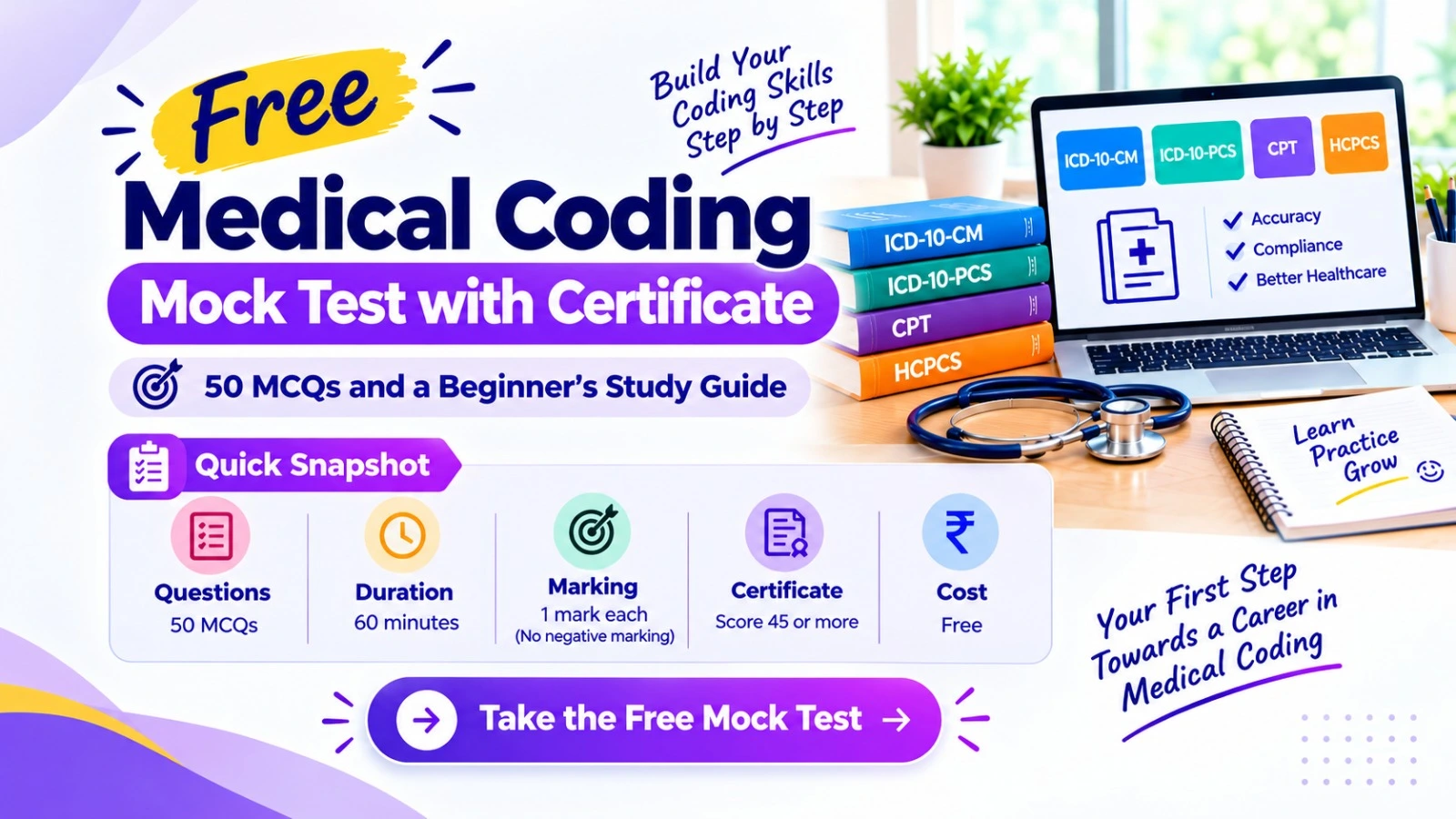
Published on: October 27, 2026 If you’re a pharmacy, life science or nursing graduate, someone has… Read More
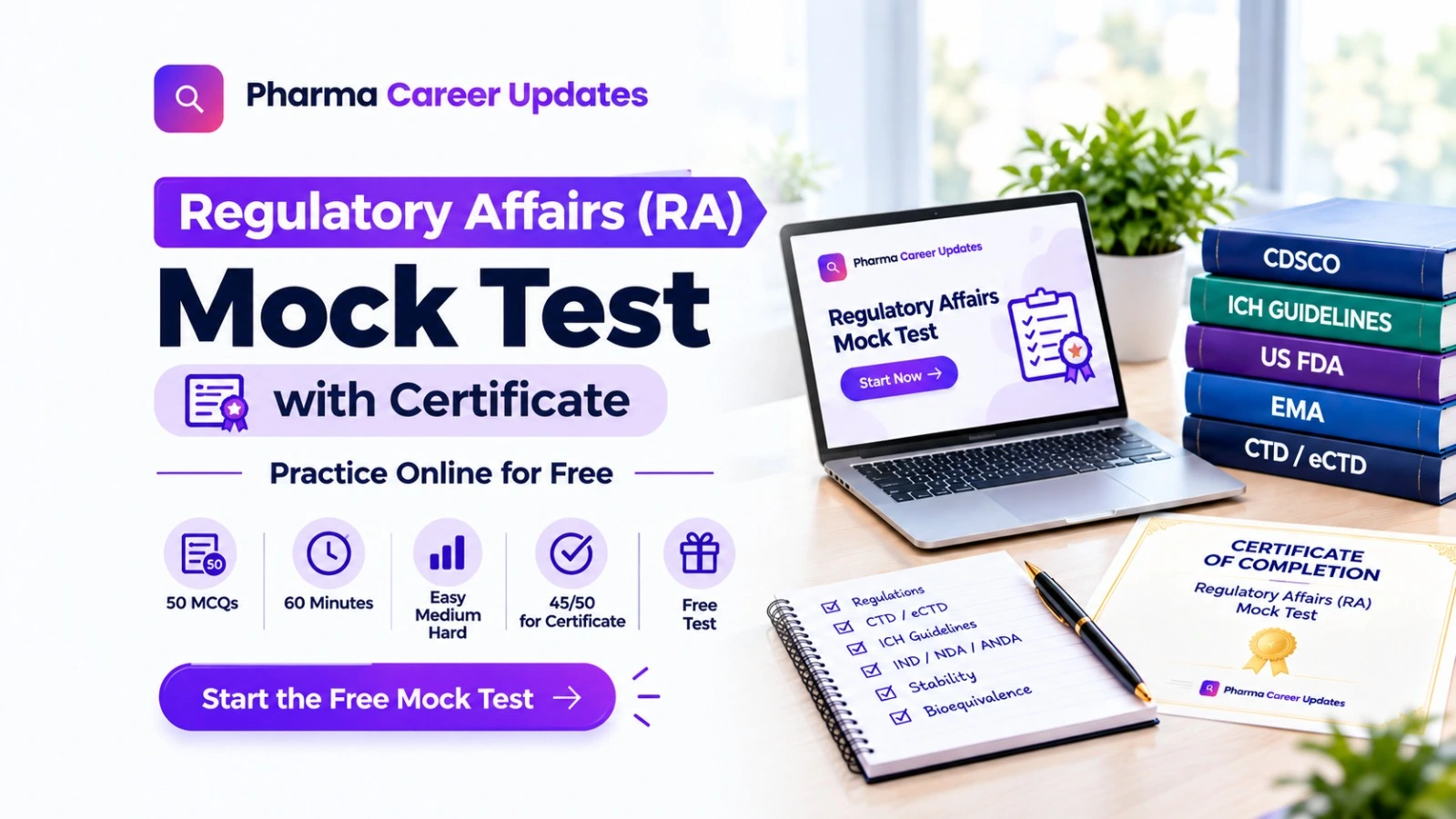
Regulatory Affairs (RA) Mock Test with Certificate – Practice Online for Free Published on: October 23,… Read More
Free Pharma Mock Tests
Test yourself on the subjects that matter for GPAT, pharmacist and pharma job exams.