Free Medical Coding Mock Test with Certificate: 50 MCQs and a Beginner’s Study Guide
Published on: October 27, 2026 If you’re a pharmacy, life science or nursing graduate, someone has… Read More

Published on: September 21, 2026
Completing a B.Pharm opens up several career options beyond working in a pharmacy. Graduates can explore pharmaceutical manufacturing, quality, regulatory affairs, clinical research, pharmacovigilance, medical coding, sales and marketing, research and other healthcare-related fields.
The right path depends on your interests, skills, preferred work environment and whether you want to start working or continue with higher studies.
This guide covers the major career options after B.Pharm in India, the type of work involved, useful skills, salary considerations and higher-study options.
Here are some common career paths for B.Pharm graduates:
| Career Area | Typical Entry-Level Roles | Main Work |
|---|---|---|
| Quality Assurance (QA) | QA Trainee, QA Executive | Documentation, GMP, quality systems |
| Quality Control (QC) | QC Trainee, QC Executive | Testing and laboratory analysis |
| Production | Production Trainee, Production Executive | Manufacturing and batch operations |
| Regulatory Affairs | RA Trainee, Regulatory Associate | Regulatory documentation and submissions |
| Pharmacovigilance | Drug Safety Associate, PV Associate | Drug-safety and case-processing activities |
| Clinical Research | Clinical Research Coordinator, Research Associate | Clinical trial-related activities |
| Sales & Marketing | Medical Representative, Marketing Executive | Product promotion and field activities |
| Medical Coding | Medical Coder, Coding Trainee | Healthcare documentation and coding |
| Medical Writing | Medical Writer, Scientific Writer | Scientific and healthcare content |
| R&D | Research Assistant, R&D Trainee | Formulation and pharmaceutical research |
The availability of these roles varies by employer, location, experience and qualification requirements.
For government opportunities, see our guide on Government Jobs After B.Pharm.
Quality Assurance focuses on the systems and processes used to maintain pharmaceutical quality and compliance.
Depending on the position, responsibilities may include:
Fresh graduates may start with trainee, documentation or shop-floor quality roles.
For a detailed guide, see Career in Quality Assurance After B.Pharm.
Quality Control is more laboratory-focused than QA. QC professionals test raw materials, in-process samples and finished products according to approved procedures.
| Area | Examples |
|---|---|
| Pharmaceutical analysis | Assay, dissolution, related substances |
| Instruments | HPLC, GC, UV, FTIR |
| Documentation | Test records, specifications, reports |
| Laboratory practices | GLP, sample handling, calibration |
A good understanding of pharmaceutical analysis and laboratory procedures can help when applying for entry-level QC positions. For information on India’s drug regulatory framework and pharmaceutical quality requirements, visit the official Central Drugs Standard Control Organization (CDSCO) website.
Looking for openings in quality assurance and quality control? Browse our QA/QC Jobs page for relevant job updates.
Production teams manufacture pharmaceutical products according to approved procedures and production schedules.
Common entry-level positions include Production Trainee and Production Executive.
Regulatory Affairs involves preparing and maintaining information required for pharmaceutical products to meet applicable regulatory requirements.
Regulatory Affairs can include areas such as submissions, product registration, post-approval activities, labeling and global regulatory work. For regulatory information related to medicines in the United States, you can refer to the official U.S. Food and Drug Administration (FDA) website.
If you are considering this field, see Career in Regulatory Affairs After B.Pharm and Regulatory Affairs Jobs.
Pharmacovigilance focuses on monitoring and evaluating the safety of medicines. The World Health Organization (WHO) provides further information about pharmacovigilance and medicine safety monitoring.
Good written communication, attention to detail and familiarity with medical terminology can be useful in this field.
For a detailed explanation of the roles, required skills and career opportunities, read our guide: Career in Pharmacovigilance After B.Pharm.
Clinical research involves the study of medicines, treatments and medical interventions in human participants.
B.Pharm graduates may find opportunities in clinical trial and research-related roles.
Depending on the position, work may involve trial documentation, site coordination, data collection, protocol-related activities and communication with study teams.
Pharmaceutical sales is another common career option after B.Pharm.
Medical representatives and sales professionals generally communicate pharmaceutical product information to healthcare professionals and manage assigned territories.
These roles can involve regular travel, so consider the field-based nature of the work before applying.
Medical coding is a different career path from pharmaceutical manufacturing.
Medical coders review healthcare documentation and convert relevant diagnoses, procedures and services into standardized medical codes.
For candidates targeting the U.S. healthcare market, commonly encountered coding systems include:
| Coding System | Full Form | Used For |
|---|---|---|
| ICD-10-CM | International Classification of Diseases, Tenth Revision, Clinical Modification | Diagnoses and reasons for healthcare encounters |
| CPT | Current Procedural Terminology | Medical procedures and services |
| HCPCS | Healthcare Common Procedure Coding System | Healthcare services, procedures and supplies |
Medical coding can suit graduates who prefer computer-based healthcare work and documentation.
For a detailed guide specifically for pharmacy graduates, read Medical Coding After B.Pharm.
Medical writing combines healthcare knowledge with writing and research skills.
Depending on the employer, work may include:
Strong English, research ability and an understanding of scientific information are useful for this career.
Research and Development involves developing, improving or evaluating pharmaceutical products and formulations.
Depending on the organization, work may involve:
Some specialized R&D positions may require an M.Pharm, M.Sc., Ph.D. or another relevant qualification, so check the requirements of individual vacancies.
B.Pharm graduates can also explore related areas such as:
| Career Area | What the Work Can Involve |
|---|---|
| Hospital Pharmacy | Dispensing and pharmacy operations |
| Community Pharmacy | Dispensing and patient-facing services |
| Supply Chain | Inventory, procurement and logistics |
| Drug Information | Researching and communicating medicine-related information |
| Healthcare Operations | Administrative and operational activities |
| Medical Devices | Regulatory, quality, sales or product-related roles |
| Government Sector | Pharmacist, Drug Inspector and other eligible roles |
| Academics | Teaching after meeting applicable qualifications |
Eligibility varies by employer and recruitment notification.
There is no fixed salary for B.Pharm graduates. Pay can vary based on the role, company, location, experience and specialization.
| Career Stage | Factors That Can Affect Salary |
|---|---|
| Fresher | Role, company, location and basic skills |
| 1–3 years | Experience, specialization and performance |
| 3–5 years | Technical expertise and responsibilities |
| Experienced | Specialization, leadership role and employer |
Starting salary is only one factor to consider. The skills and experience gained from your first role can also influence future opportunities.
A simple way to narrow down your options is to look at the type of work you prefer:
| If You Prefer | Areas to Explore |
|---|---|
| Laboratory work | QC, R&D |
| Manufacturing | Production, QA |
| Documentation and regulations | Regulatory Affairs |
| Drug safety | Pharmacovigilance |
| Research and trials | Clinical Research |
| Communication and field work | Sales & Marketing |
| Computer-based healthcare work | Medical Coding |
| Scientific writing | Medical Writing |
| Government employment | Government pharmacy-related roles |
Both options can make sense depending on your career plans.
If you are considering postgraduate studies, you can explore our guides on GPAT 2027 and NIPER JEE 2027.
Focus on roles that match your qualification, interests and skills instead of applying randomly.
Read the responsibilities, experience requirements and required skills before applying.
Highlight the skills relevant to the particular role. A QC resume does not need to be identical to an RA or medical coding resume.
Consider the work, learning opportunities and experience you can gain along with the starting salary.
Be cautious about vacancies asking for money for recruitment, interviews or guaranteed employment. Verify the employer and vacancy before sharing documents or making payments.
Yes. B.Pharm graduates can explore private-sector roles in QA, QC, production, regulatory affairs, pharmacovigilance, clinical research, sales, medical coding and other healthcare-related fields.
Depending on the vacancy, freshers may find trainee or entry-level opportunities in QA, QC, production, sales, Regulatory Affairs, medical coding and pharmacovigilance.
Always check the experience requirement of the individual vacancy.
Yes. Some companies recruit B.Pharm graduates for entry-level Regulatory Affairs positions, while other roles may require experience or postgraduate qualifications.
See our Regulatory Affairs career guide.
Yes. B.Pharm graduates can apply for government positions where the recruitment notification accepts their qualification.
See Government Jobs After B.Pharm for more information.
Yes. B.Pharm graduates can move into medical coding and related healthcare documentation roles. Training in medical terminology and coding systems can be useful depending on the employer.
M.Pharm can be useful for specialization, research, academic opportunities and roles where postgraduate qualifications are preferred or required. However, it is not necessary for every career path.
Start by identifying the type of work you prefer, such as laboratory, manufacturing, documentation, regulations, research, field work or computer-based healthcare work. Then check the entry requirements and career path for those roles.
A B.Pharm degree can lead to careers in QA, QC, production, Regulatory Affairs, pharmacovigilance, clinical research, sales and marketing, medical coding, medical writing, R&D and government services.
Instead of trying to choose a career based only on salary or popularity, understand the actual work and entry requirements. Pick one or two areas that match your interests, build the relevant skills and start gaining practical experience.
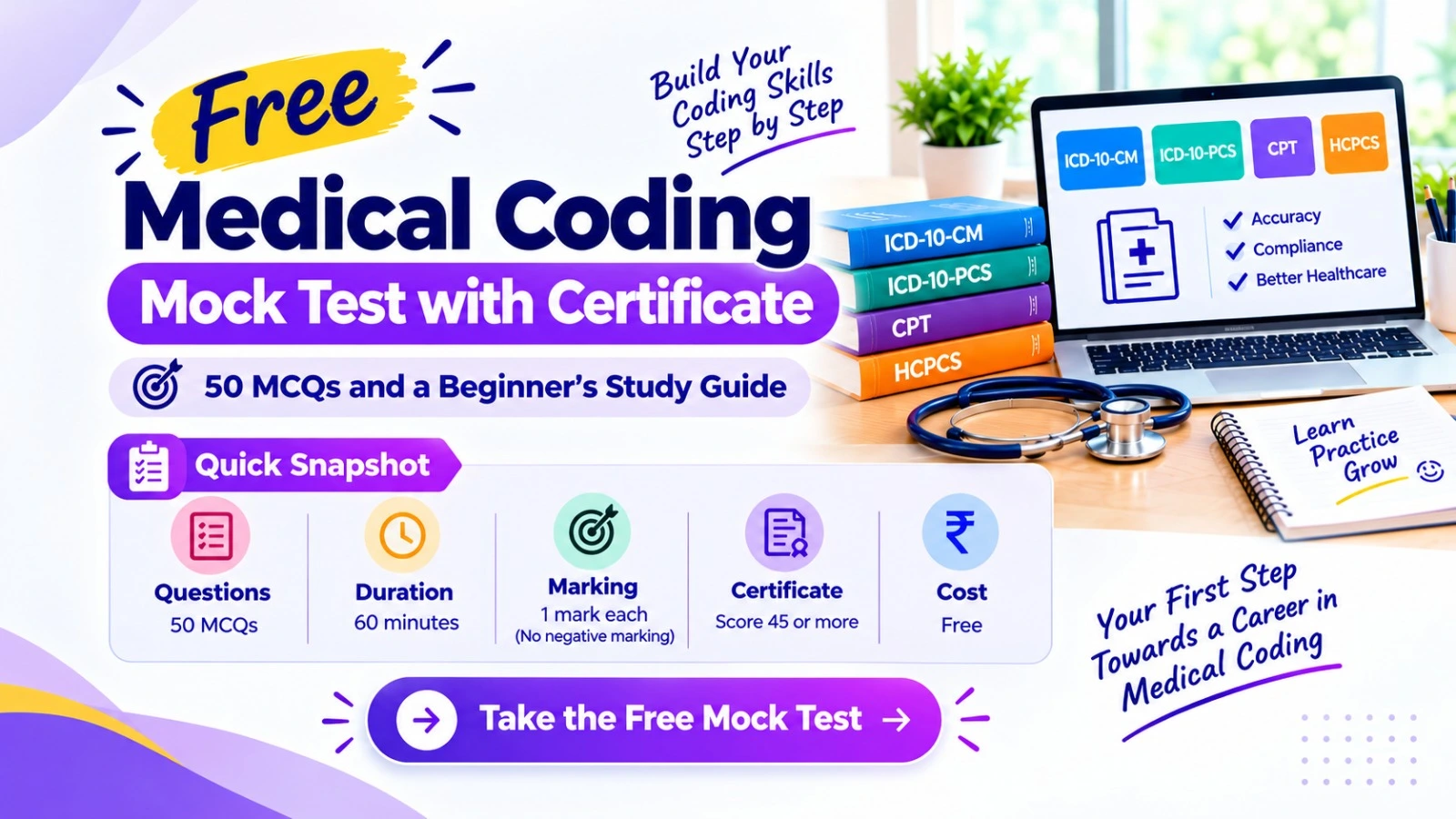
Published on: October 27, 2026 If you’re a pharmacy, life science or nursing graduate, someone has… Read More
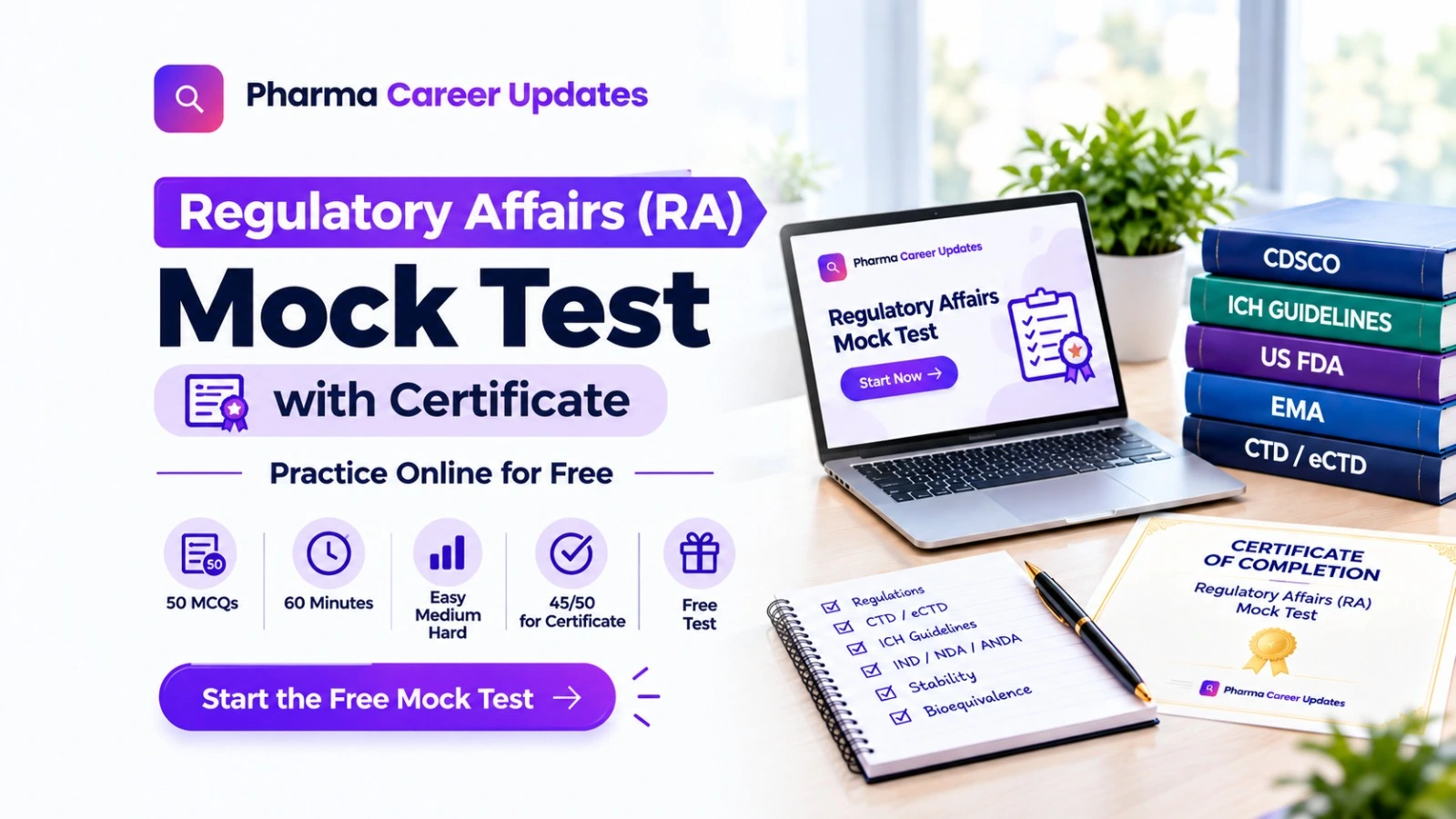
Regulatory Affairs (RA) Mock Test with Certificate – Practice Online for Free Published on: October 23,… Read More
Free Pharma Mock Tests
Test yourself on the subjects that matter for GPAT, pharmacist and pharma job exams.